
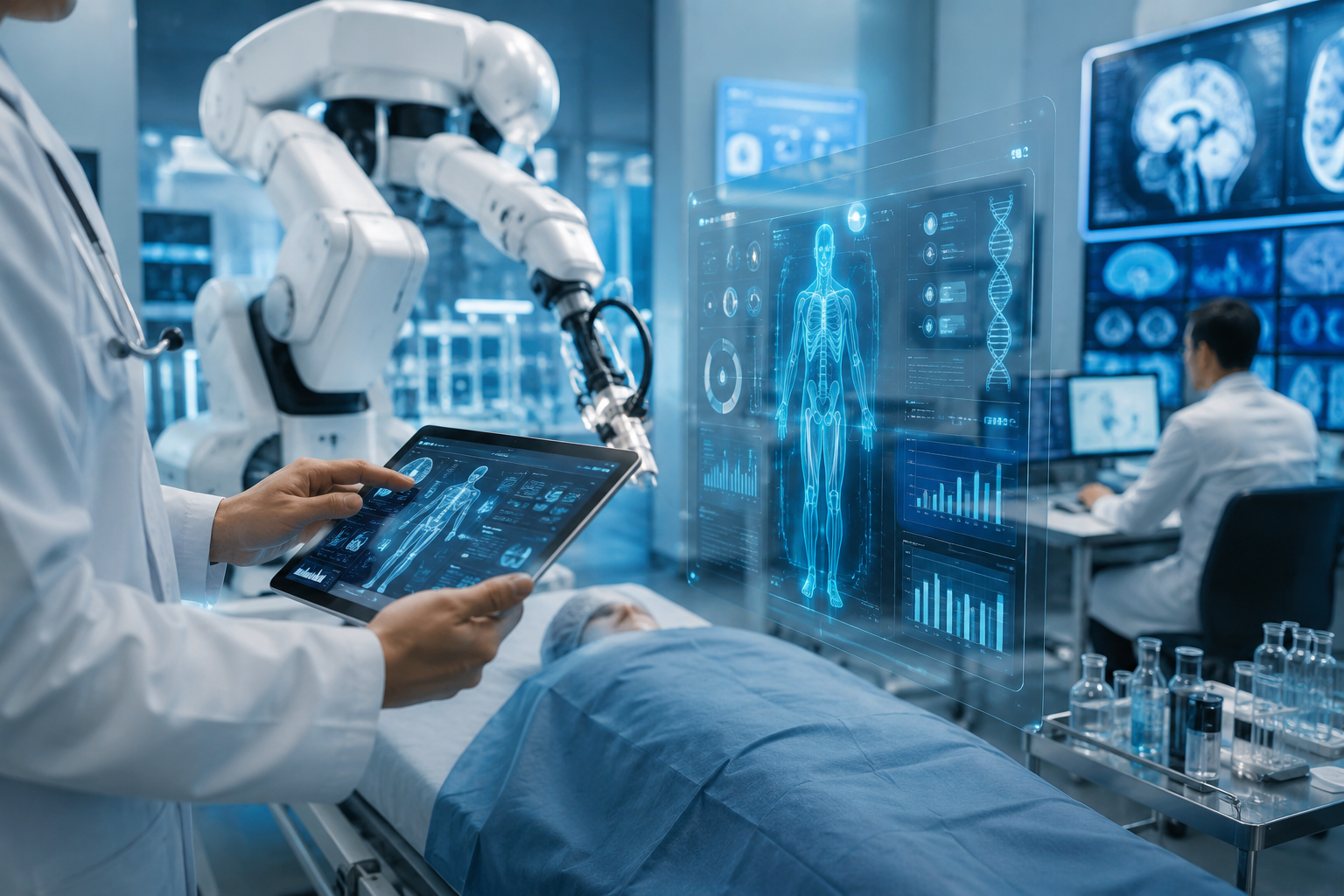
Something cool is happening in hospitals and clinics right now. Doctors can find cancer earlier than before. People who had to take medicine for their lives are now being treated in a completely different way.. People in far away places can get special care without having to travel. This is not something from a science fiction movie. This is healthcare innovation in 2026. It is changing everything about how we live get better and get older.
If you have ever sat in a waiting room and wondered why doctors only try to make us better after we get sick you will like what you are about to read. The new ideas in healthcare innovation are about making our health better faster and more personal.
Lets look at the 10 technologies that are making this happen.

1. AI-Powered Diagnostics: Healthcare Innovation That Sees What We Miss
Imagine you have a stack of X-rays and you have to find the one that shows someone has lung cancer. Now imagine a computer can do that in a few seconds. And it is right most of the time.
That is what AI diagnostics can do. It is one of the important new ideas in healthcare innovation. Computers are now being used in hospitals to look at pictures of the inside of our bodies. They can find problems that human eyes might miss.
How AI Diagnostics Are Improving Healthcare Innovation in Real Clinical Settings
What is really exciting is that this technology is being used in hospitals. Computers are now connected to the systems that store our information. They can flag problems warn doctors about reactions to medicine and help doctors make good decisions.
The result is that fewer people are getting sick because their problems were not found. People are getting treated faster.. Patients are finding out about problems when they are still small.
2. CRISPR Gene Editing: The Personal Healthcare Innovation
In 2025 scientists used a special tool called CRISPR to help a six-year-old child. They changed the childs genes to reduce their need for medicine. This was a moment for healthcare innovation.
CRISPR lets doctors fix problems in our genes. We are not just treating symptoms. We are changing the cause of the problem. Some diseases that were thought to be impossible to cure are now being cured.
Why CRISPR Represents a New Era of Healthcare Innovation
The latest version of CRISPR is even better. It is more precise and safer. This means that scientists can use it to help people.
The big challenge now is to get this technology to everyone who needs it. We need to make sure that people in all parts of the world can get this help.
3. Robotic Surgery: Precision Healthcare Innovation in the Operating Room
Imagine a doctor in New York doing surgery on someone in Texas using a robot. This is not an idea. It is happening now.
Robotic surgery is getting better and better. Robots can do surgery through cuts. This means that people lose blood get fewer infections and recover faster.
Robotic Healthcare Innovation Beyond the Operating Table
Robots are not just being used for surgery. They are being used in hospitals to deliver medicine, clean rooms and help nurses.
4. Wearable Biosensors: Healthcare Innovation You Can Wear on Your Wrist
Your smartwatch can already track your steps and sleep. Soon it might be able to find problems with your heart before you even feel sick.
Wearable biosensors are one of the growing areas of healthcare innovation. These devices can track your heart rate, blood oxygen and other important health signs. They can even warn your doctor if something is wrong.
Wearables and the Shift Toward Preventive Healthcare Innovation
What is really exciting about technology is the data it gives us. When your doctor can see what is going on with your body in time they can help you before you get sick.
This could prevent up to 50% of hospital visits. That is not just care. It is also cheaper.
5. Precision Medicine: Healthcare Innovation Tailored to Your DNA
For a time doctors have been giving people the same medicine even if they are not average.. What if you are different? What if your body reacts to medicine in a way?
Precision medicine is an area of healthcare innovation that is changing this. Doctors can now look at your genes. See what medicine will work best for you.
How Precision Healthcare Innovation Is Entering Everyday Practice
Precision health is not just for people with diseases. It is becoming available to everyone. Doctors can now use testing to see what will work best for each patient.
This is healthcare innovation that feels very personal. Because it is all about you.
6. Telehealth and Virtual Care: Healthcare Innovation Without Borders
When COVID-19 happened telehealth became really popular fast. Now it is a part of healthcare innovation.
Telehealth is not a video call. It is a way for doctors to take care of people from away. Some hospitals even have ” wards” where people can get care from home.
Telehealth as a Healthcare Innovation for Underserved Communities
Telehealth is really important for people who live in areas or do not have access to good healthcare. It is a way to get care to people who need it.
7. 3D Bioprinting: The Healthcare Innovation That Grows New Organs
There are a lot of people waiting for organ transplants. 3D bioprinting is a technology that might be able to help.
Scientists can now print tissue that’s like real human organs. This is still an area of research but it is very promising.
3D Bioprintings Near-Term Healthcare Innovation Impact
3D bioprinting is not just for organs. It is also being used to make prosthetics models for surgery and custom implants.
8. Brain-Computer Interfaces: A Profound New Healthcare Innovation, for Neurological Care
Some people get sick or hurt and cannot talk or move. Brain-computer interfaces are a technology that can help these people communicate.
This is a new area of research but it is very exciting. It could change the lives of people with neurological diseases.
Neural implants like those being developed at the University of Michigans Paradromics wireless BCI, which started its human clinical trial in 2026 can figure out what we want to do and what we want to say just by reading our brain signals. This is really cool because it can help people who have lost the ability to communicate. In fact it can help them communicate again with up to 86% accuracy.
The Future of Healthcare Innovation Through Neural Technology
implants can do more than just help people communicate. They can also help treat epilepsy, depression and Parkinsons disease by sending signals to the right parts of the brain. This is an area of healthcare innovation that combines neuroscience, artificial intelligence and engineering. We are still learning about what it can do.
9. Nanomedicine: The Smallest Healthcare Innovation With the Biggest Promise
Imagine if we could treat cancer without hurting cells. That is what nanomedicine is trying to do. It uses particles that are too small to see to deliver medicine directly to the bad cells. This way the good cells are not hurt.
Nanoparticles can be designed to go to the place in the body and deliver medicine exactly where it is needed. This is really news for people with cancer because it means they will not have to suffer from the bad side effects of traditional cancer treatment.
Nanomedicine as a Next-Generation Healthcare Innovation
Researchers are also looking at using nanoparticles to treat heart disease, infections and brain disorders. As this technology gets better it will change the way we think about delivering medicine. Of just giving someone a pill and hoping it works we can send the medicine exactly where it is needed.
10. AI-Powered Healthcare Administration: The Healthcare Innovation Saving Time and Lives Behind the Scenes
Not all healthcare innovation happens in the hospital room. Some of it happens behind the scenes in the systems that support care. This is where artificial intelligence is really making a difference. It is helping with paperwork so doctors can spend time with patients.
AI is writing summaries of visits and transcribing conversations between doctors and patients. It is also helping hospital administrators anticipate when they will need staff and making sure they have the right supplies. This is all really important because it helps keep patients safe.
Why Operational Healthcare Innovation Matters for Patients
Some people think that administrative healthcare innovation is about saving money.. It is not. It is about making sure patients get the care possible. When doctors have to spend much time on paperwork they have less time to spend with patients.. When things go wrong it can be really bad for patients. AI is helping to make all of this better.
The Picture: What Healthcare Innovation in 2026 Means for All of Us
When we look at all of these new technologies together we can see that something big is happening. It is not about one or two new discoveries. It is a lot of different technologies all advancing at the same time and working together.
Healthcare innovation in 2026 is not about better medicine. It is about medicine that is personalized and that can help prevent problems before they happen. It is about giving doctors the tools they need to help patients.
Course there are still challenges to overcome. We need to make sure that everyone has access, to these technologies, not just people who have a lot of money. We need to protect data and make sure that AI is used safely and responsibly.
The future is looking bright. Healthcare innovation is happening faster than it ever has before. It is going to change the world.
Whether you are a doctor, a patient or just someone who cares about healthcare one thing is clear: the medicine of tomorrow is being built today.. It is being built for you.
Last updated: June 2026 | Category: Healthcare Innovation, Medical Technology, Patient Care