If you just started using 5G you might be surprised to know that the world is already moving towards 6G. The conversation about 5G vs 6G’s not just about technology it is about how we will live, work and communicate in the next ten years. So let us break it down in terms.
What is the Real Difference Between 5G and 6G
Most people think 5G is the thing.. For many parts of the world it still is.. Companies like Samsung, Nokia and Ericsson along with governments are already working on 6G. So what is the main difference between these two technologies.
At its core the difference between 5G and 6G comes down to three things: how fast they are, how time they take to respond and the kind of world they are designed for.
What is 5G. Where Are We Now
5G or the fifth generation of wireless technology started rolling out in 2019. It was meant to be a jump from 4G LTE and in many ways it was.
Key Features of 5G
- Speed: 5G can be as fast as 10 Gbps but in life it is usually between 100 Mbps and 1 Gbps.
- Response Time: It can respond in as little as 1 millisecond making real-time communication more reliable.
- Capacity: 5G can support up to 1 million devices per square kilometer which is great for smart cities and IoT.
- Frequency: It uses sub-6 GHz and millimeter wave frequency bands.
Where is 5G Today
As of 2024-2025 5G is available in over 80 countries. Many cities in the US, South Korea, China and parts of Europe have 5G coverage. However rural areas are still behind. 5G is now used in things like self-driving cars, remote surgeries and industrial automation.
Here is the thing. 5G has not even reached its full potential yet.. We are already talking about 6G. This shows how fast technology is moving.
What is 6G. Is It Real
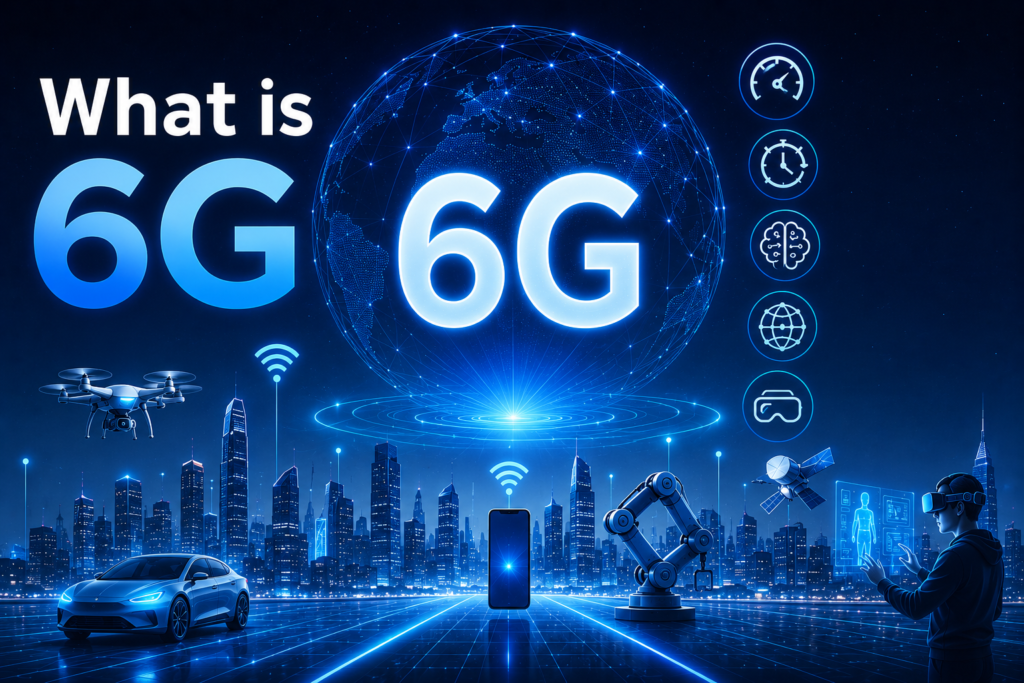
Yes 6G is real. It is not here yet. It is still in the research phase. Most experts think 6G will not be available until around 2030.
So why are we talking about it now. Because the decisions we make today will shape what 6G will look like when it arrives.
What Will 6G Do
This is where things get exciting. 6G is not a small upgrade it is a big leap.
- Speed: 6G will be as fast as 1 terabit per second which is 100 times faster than 5G.
- Response Time: It will respond in less than 1 millisecond, maybe as low as 10-100 microseconds.
- AI: 6G will have artificial intelligence built into it unlike 5G which uses AI as a tool.
- Frequency: 6G will use terahertz frequency bands, which will give us a lot more bandwidth.
- Sensing: 6G will be able to sense the environment, like real-time 3D mapping.
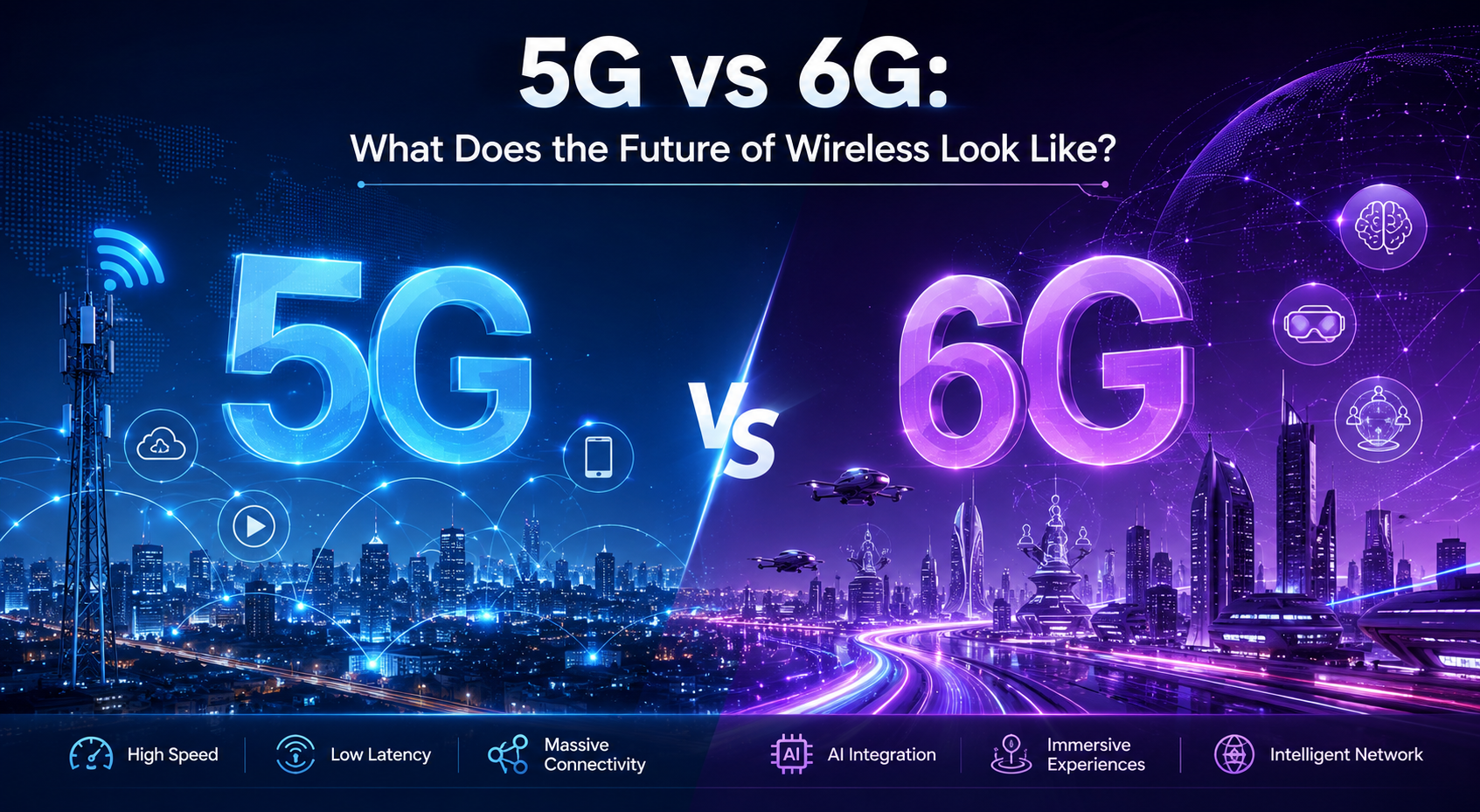
5G vs 6G Comparison
5G vs 6G — A Side-by-Side Comparison
Let’s put the numbers next to each other so you can see just how different these two technologies really are.
| Feature | 5G | 6G |
|---|---|---|
| Peak Speed | ~10 Gbps | ~1 Tbps |
| Latency | ~1 ms | ~0.01–0.1 ms |
| Frequency Band | Sub-6 GHz / mmWave | Terahertz (THz) |
| Device Density | 1M devices/km² | 10M+ devices/km² |
| AI Integration | Supplementary | Native / Built-in |
| Commercial Launch | 2019 | ~2030 |
| Energy Efficiency | Better than 4G | 10–100x better than 5G |
When you look at this table, the 5G vs 6G gap isn’t subtle. It’s enormous.
How 5G and 6G Will Change Your Life
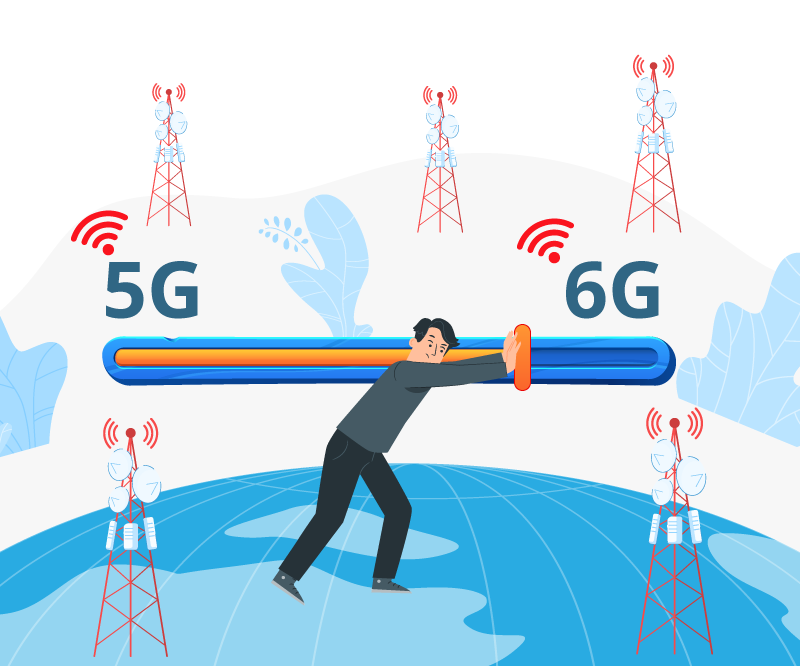
Technology is fun.
What 5G is Already Doing
- cities with connected traffic and energy systems
- Remote healthcare, including surgeries
- AR/VR experiences that work in real-time
- Industrial automation
- Self-driving cars
What 6G Will Make Possible
This is where imagination meets engineering. 6G will enable:
- calls
- Digital copies of cities and factories
- Fully autonomous systems
- Immersive XR experiences
- Precise healthcare using nanotechnology
- Global connectivity even in remote areas
The Challenges Ahead
We need to talk about the challenges.
Technical Challenges
Terahertz waves are hard to work with. They do not travel far. Get absorbed by air. Building infrastructure for this will be a challenge.
Cost and Infrastructure
5G cost a lot to build. 6G will cost more. Governments and companies will need to invest a lot.
Frequency Regulation
The terahertz spectrum is not regulated yet. International bodies will need to work to allocate it fairly.
Security and Privacy
With 6G using AI and sensing the environment, security and privacy are a concern. We need to design networks.
Who is Leading the 5G vs 6G Race
The country that leads in 6G will set the standards and have advantages.
- China has launched 6G research programs and filed many patents.
- South Korea and Japan are funding 6G development with a target launch in 2030.
- The US has launched the Next G Alliance to ensure leadership in 6G.
- Europe is funding 6G research through the Hexa-X project.
Should You Think 6G Now
For most people the answer is not yet.. Keep it in mind.
If you are a business leader start planning for 6G. If you are a developer now is a time to get involved in 6G research.
The Bottom Line on 5G vs 6G
Here is the way to think about it:
5G is what we are building on now. It is changing industries. Connecting the world.
6G is the future. It will be fast, intelligent and integrated with our world. The line, between digital and real will blur.
The conversation about 5G vs 6G is not really about which one is better at this point. We need to understand where we are with 5G vs 6G and where we are going with 5G vs 6G. We have to make sure we are ready when the next wave of 5G vs 6G arrives.
If we look at what has happened with wireless technology in the past that next wave of 5G vs 6G always comes faster than we think it will.
Quick Recap. 5G vs 6G Key Takeaways
- 5G is already available. It is getting used more and more all around the world. 6G is still being. It is expected to be ready by 2030.
- 6G will be one hundred times faster than 5G and it will have almost no delay.
- 6G will have intelligence built into the network from the start. It will not be something that is added later.
- Some things we will be able to do with 6G include making calls using digital twins and having machines that can work completely on their own.
- The competition between 5G vs 6G is not just about technology. It is also, about politics and countries.
- Companies and people who make things should start getting ready for 6G.