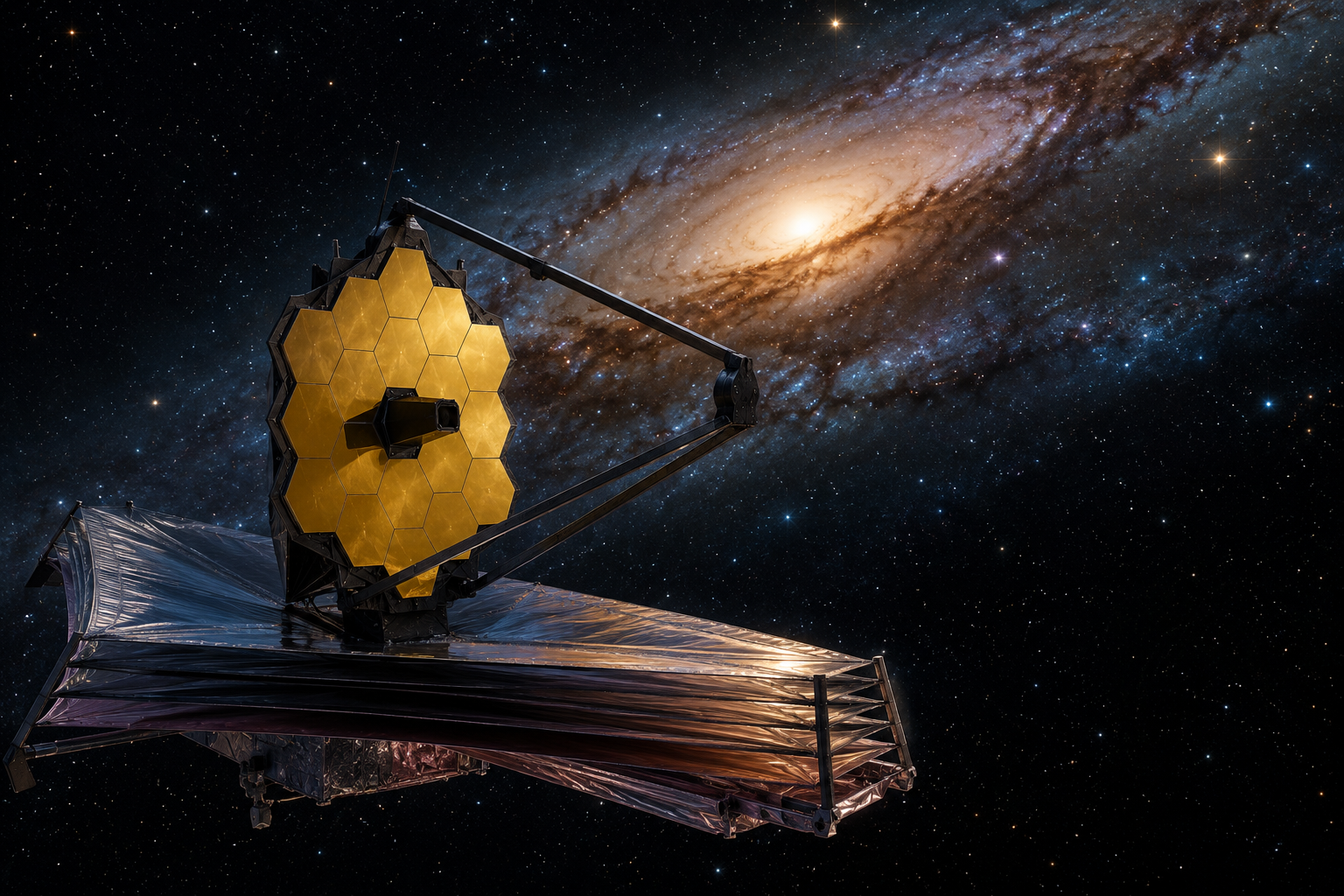
The universe has always inspired curiosity, but it has also reminded humanity how little we truly know about what lies beyond our planet. For decades, astronomers relied on powerful telescopes to study distant stars, galaxies, and planets. Even with remarkable advances in technology, many questions about the origins of the universe remained unanswered. Everything changed with the launch of the James Webb Space Telescope, the most advanced space observatory ever built. In this article, we explore the 5 Terrifying Discoveries of James Webb Space Telescope that have challenged long-standing scientific theories and revealed just how mysterious the universe really isThe universe is a big mystery.
We have always been curious about what’s out there beyond our planet. For a time scientists used big telescopes to study stars, galaxies and planets that are far away. These telescopes helped us learn a lot about space. We still do not know everything. Then the James Webb Space Telescope was. It is the most advanced telescope ever made.
The James Webb Space Telescope has taken some pictures and found some things that surprised even the best scientists. Of just proving what we already thought it found some weird things like old galaxies, strange molecules and huge black holes. These things are making us question what we know about the universe. In this article we are going to talk about the 5 Discoveries of the James Webb Space Telescope that are changing what we know about space.
The James Webb Space Telescope is different from telescopes because it looks at the universe in infrared light. This means it can see through clouds of dust and find things that are really far away. It is like a time machine that lets scientists look back at the beginning of the universe. Every time it makes a discovery it adds a new piece to the puzzle but sometimes these pieces make us even more confused.
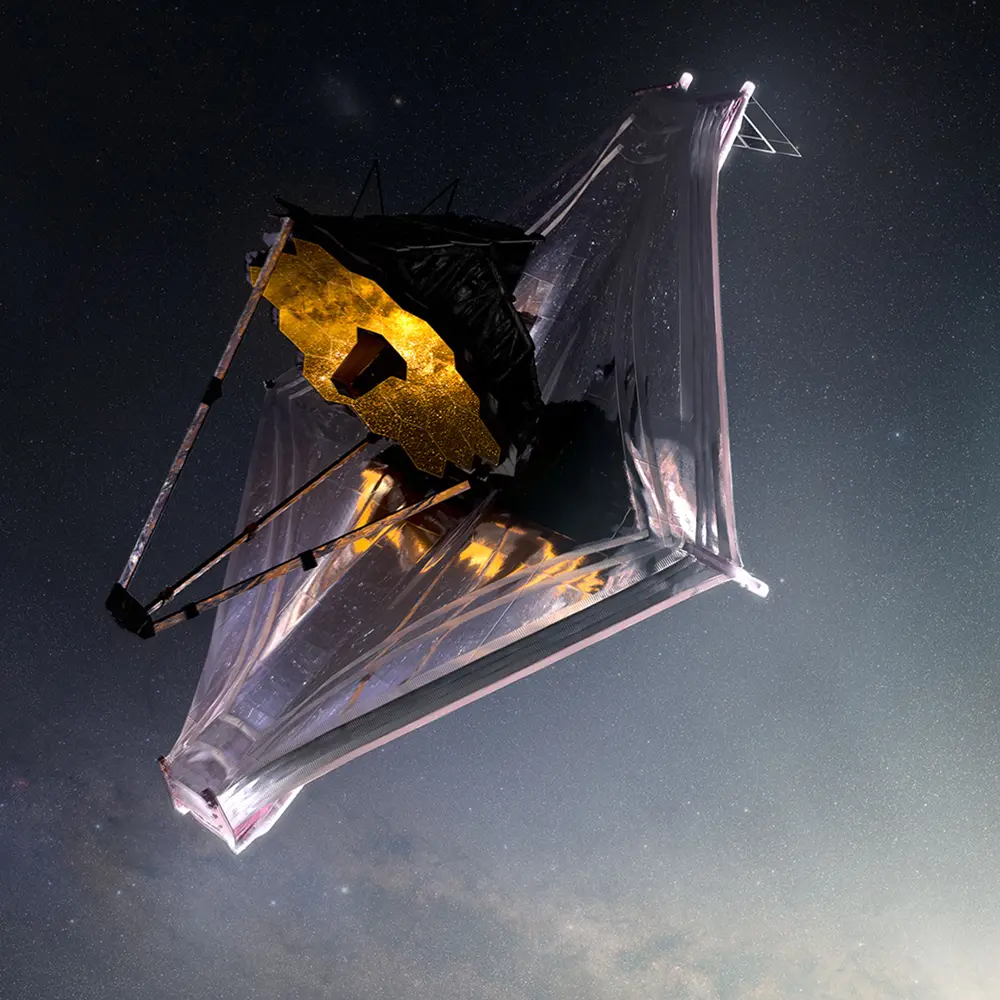
Lets talk about the 5 Discoveries of the James Webb Space Telescope.
- Ancient Galaxies: This is one of the discoveries that surprised scientists. The James Webb Space Telescope found galaxies that are really old. They are older than scientists thought they would be. These galaxies formed after the Big Bang. They already had a lot of stars and complex structures. This is weird because scientists thought galaxies took a time to form.
The James Webb Space Telescope finding these galaxies is making scientists think again about how galaxies formed. Some scientists think that stars might have formed faster than we thought and others think that there might be some processes that helped galaxies grow quickly. This does not mean that the Big Bang theory is wrong. It means that we still have a lot to learn about the universe.
This discovery reminds us that the universe might have evolved in ways that we are just starting to understand.
- A Mystery Molecule: The James Webb Space Telescope also found some molecules in distant planets. It can detect these molecules by looking at how light interacts with gases. This is helping scientists understand how planets change and how complex chemical reactions happen in the universe.
When scientists found these molecules it gave them more clues about what is happening on other planets. Some of these molecules form naturally. Others might need special environments that we do not fully understand. This does not mean that we have found life but it means that the chemistry of planets is more complicated than we thought.
This discovery is exciting for scientists who study planets and the building blocks of life.
- Supermassive Black Holes: The James Webb Space Telescope found black holes in the early universe. This is surprising because scientists thought that black holes took a time to grow.. The James Webb Space Telescope found black holes that already existed when the universe was really young. This is a challenge to what we thought we knew about the universe.
Scientists are now trying to figure out how these black holes grew fast. Did they grow faster than we thought? Were the first stars bigger than we thought?. Is there something we do not know about that helped them form? Whatever the answer is, it is clear that we still have a lot to learn about holes.
The James Webb Space Telescope is helping us learn more, about the universe. It is also showing us how much we still do not know.
The James Webb Space Telescope Found Some Things About How Planets Form
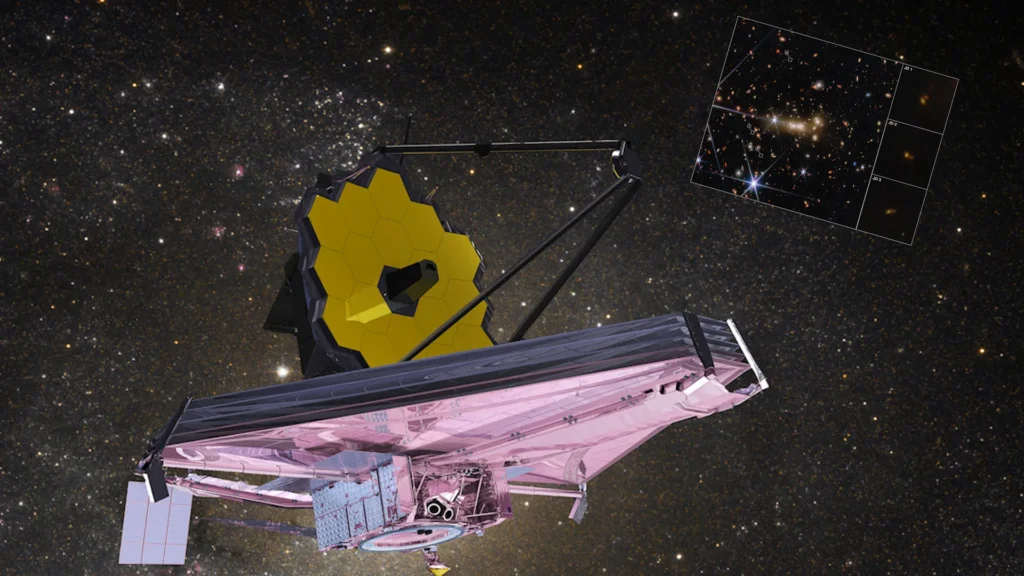
The James Webb Space Telescope made some big discoveries. One of the findings is how planets are made. Before the James Webb Space Telescope started sending back pictures scientists thought planets were made in a calm way. They thought gas and dust came together around stars over millions of years.. The new pictures show that making planets is actually a really wild and crazy process.
The James Webb Space Telescope took some pictures of gas and dust spinning around new stars. Inside these spinning clouds scientists saw crashes moving clouds of stuff and environments that are not stable. Young planets are pulling on each other with gravity. Of forming in a peaceful way many planets come from really crazy and active places in space.
This helps us understand why planets are all so different. Some planets are like Earth. Some are huge balls of gas. do not survive the conditions when they are first made. By studying these planets scientists can also learn about how our own solar system was made over 4.5 billion years ago.
The James Webb Space Telescope shows that making planets is a lot more exciting than scientists thought. As the telescope keeps looking at stars scientists think they will find even more surprising things that can help us understand how planets are made.
The James Webb Space Telescope is Helping Us Search for Alien Life
Use up and down arrow keys to resize the meta box pane.
Use up and down arrow keys to resize the meta box pane.
One of the exciting things the James Webb Space Telescope can do is study the air around planets that are not in our solar system. These planets are around stars and we could not see them very well before. Now the James Webb Space Telescope can look at the gases around them. Help us figure out if they might have life.
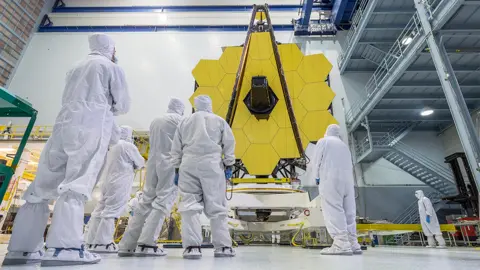
When starlight passes through a planets air different gases absorb kinds of light. By looking at these changes scientists can find gases like water, carbon dioxide and methane. This helps us understand what the conditions are like on planets and if they might be able to support life.
The James Webb Space Telescope has not found life yet but it is really good at finding planets that we should look at more closely. Some planets have air that is made up of different things, which means the things we need for life might be more common in the universe than we thought.
This brings us closer to answering a question: Are we alone in the universe?
Why the 5 Terrifying Discoveries of James Webb Space Telescope Are Important
Here’s a rewritten version with shorter sentences, better readability, and SEO-friendly structure. Most sentences are under 20 words, which helps improve readability scores.
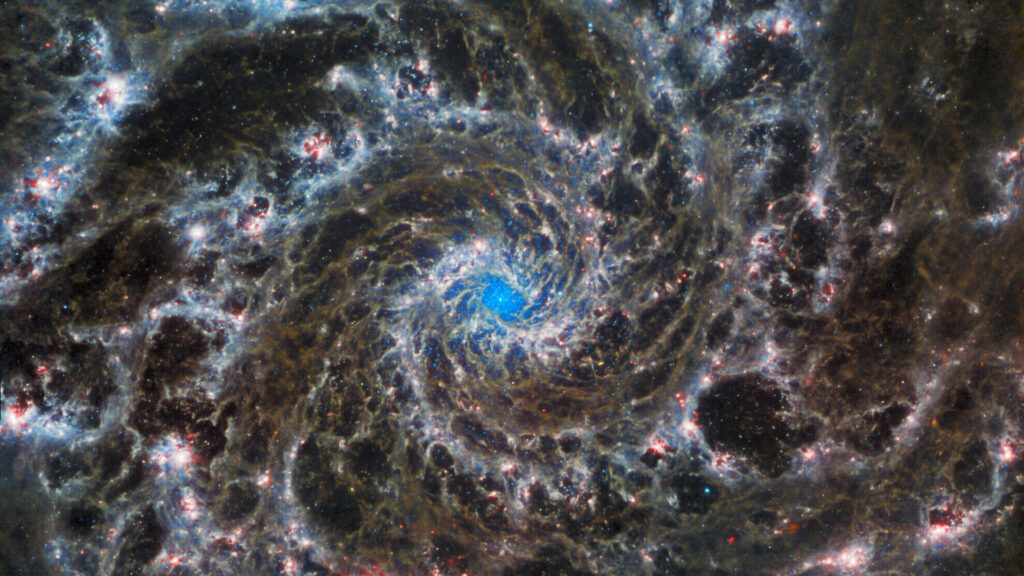
The NASA/ESA/CSA James Webb Space Telescope captured this stunning image of M74, also known as the Phantom Galaxy. The image reveals the galaxy’s bright central region and beautifully defined spiral arms. Webb’s powerful infrared vision uncovered delicate filaments of gas and dust stretching across the galaxy. It also provided an exceptionally clear view of the nuclear star cluster at the galaxy’s center.
The Phantom Galaxy is classified as a grand-design spiral galaxy. Its spiral arms are well-defined and symmetrical. This structure makes it different from spiral galaxies with fragmented or irregular arms. Located about 32 million light-years from Earth in the constellation Pisces, M74 faces almost directly toward our planet. This orientation allows astronomers to study its structure in remarkable detail.
Because of its nearly face-on position, the Phantom Galaxy has become a favorite target for astronomical research. Scientists use it to investigate how spiral galaxies form and evolve. The James Webb Space Telescope observed M74 using its Mid-Infrared Instrument (MIRI). These observations help researchers study the earliest stages of star formation in nearby galaxies.
The observations are part of the international PHANGS research project. This project focuses on 19 nearby star-forming galaxies. Many of these galaxies were previously observed by the Hubble Space Telescope and several ground-based observatories. Webb’s infrared data adds an entirely new level of detail to those earlier observations.
With Webb’s high-resolution infrared images, astronomers can identify star-forming regions more accurately. They can also estimate the ages and masses of star clusters with greater precision. In addition, the telescope helps scientists study tiny dust grains drifting through interstellar space.
Earlier observations by the Hubble Space Telescope identified bright star-forming regions known as H II regions within M74. Hubble observes ultraviolet and visible light, while Webb specializes in infrared wavelengths. Together, these telescopes provide a more complete view of galaxy evolution and star formation.
Scientists also combine Webb’s observations with data from powerful radio telescopes, including the Atacama Large Millimeter/submillimeter Array (ALMA). By analyzing information from multiple observatories, researchers gain a deeper understanding of how galaxies grow, how stars form, and how cosmic dust shapes the universe.
This collaborative approach is helping astronomers uncover new details about the lifecycle of galaxies. It also demonstrates the extraordinary capabilities of the James Webb Space Telescope in expanding our knowledge of the universe.
The James Webb Space Telescope has changed the way we think about the universe. It found things that challenge what scientists thought they knew. From old galaxies to big black holes, crazy planetary systems and planets that might have life every discovery shows us that the universe is more complicated than we thought.
Of just confirming what we already thought these findings make scientists think again about how galaxies, black holes and planets are made. Each new discovery opens up areas of research and raises new questions about the universe.
The James Webb Space Telescope can look at things that’re really far away which means we can see what the universe was like over 13 billion years ago. Every picture it takes helps us understand how the universe changed over time.
How the 5 Terrifying Discoveries of James Webb Space Telescope Could Change Astronomy Forever
The James Webb Space Telescope is just getting started. Scientists think it will keep looking at the galaxies studying planets that are not in our solar system and trying to understand dark matter. It might even find things in space that we have never seen before.
There are already observations scheduled for the next few years and many scientists think the best discoveries are still to come. Every new mission can answer questions we have had for a time and show us new mysteries that we do not understand yet. This is what makes the James Webb Space Telescope so important for science.
As scientists keep looking at the data from the telescope the future of astronomy looks really bright. The things we learn today will help us come up with ideas plan new space missions and inspire new scientists to keep exploring the universe.
Final Thoughts on the James Webb Space Telescope
The James Webb Space Telescope has changed how we think about the universe. It found galaxies, mysterious molecules, big black holes, crazy planetary systems and it can study the air around planets that are not in our solar system. These discoveries challenge what we thought we knew and open up areas of research.
These findings are not scary because they threaten us. They are exciting because they show us how much we still have to learn about the universe. Every new thing we find out has the potential to change what we think about space.
As the James Webb Space Telescope keeps working scientists think they will find more amazing things. What we know now might just be the beginning of an exciting time, for astronomy and it can help us understand the universe better.